Stephen Calarco on Earned Empathy, Accountability, and Moving the Needle with Gen Pop Clients
Today I sit down with my good friend Stephen Calarco to talk about what really helps gen pop clients make progress. We unpack a few key items in this episode: Why more gym time isn’t always the answer, How to get clear on what a goal actually requires, and Why nutrition habits, sleep, and life […]
Continue Reading9 Things I’ve Changed About My Training

I may not know you personally, but I can tell you one thing with 100% confidence… …you are getting older! Unfortunately we all are – which kinda sucks. We start out young and spry. In the weight room, we’re crushing weights and hitting PR’s every week. Our joints feel amazing and we can train hard […]
Continue ReadingHow ONE Client Can Pay for Your Program Design Mentorship
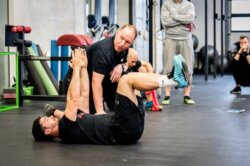
Let’s start today with a story… About 4 years ago, I got a referral from our amazing massage therapist, Jenny Owens. The client she referred (we’ll call her “Annie”), had suffered from numerous neck and upper back issues, and was finally ready to get back into working out. The issue? She’d had 8 or 9 […]
Continue ReadingWhy I Created the Program Design Mentorship

Got a random fact for you today… Did you know this is actually my SECOND iteration of the Program Design Mentorship? I ran the first Program Design Mentorship back in the Fall of 2017, but at the time, I called it a “Masters in Program Design.” I’m not an official accredited college, so I figured […]
Continue ReadingJoel Jamieson on Cardiovascular Disease, Longevity Training, and Avoiding the Law of Averages
Today, I’ve got my good friend Joel Jamieson back for his final stop on the podcast! In this episode, we explore the science and practice of training for a longer, healthier life. As the title implies we spend a great deal of time covering cardiovascular disease, but we also discuss the differences between high- and low-intensity […]
Continue Reading3 Core Competencies You MUST Develop to Build a Gym That Lasts (with Andy and Luka)
Do you want to build a better coaching business? Level up your gym? Or simply take your game to the next level? If so, you need to listen to this podcast NOW! While I’ve had both Luka and Andy on numerous times before, it definitely takes it to another level when they’re on the show […]
Continue ReadingBill Hartman on Movement Models, Return to Play, and Playing the Probabilities
I’ve got a good one for you today my friend! Bill Hartman brings 35 years of experience, and more importantly, a totally unique way of thinking about rehab, performance, and movement. In our conversation, we take a deep dive into how he moved from standard, rule-based systems to a principle-driven framework called the UHP that […]
Continue ReadingJune Q&A #2: Performance Assessments, Return to Play, and Optimizing Knee Health
Okay my friend, we’re back for Round #2 this week! Last week, I had some AWESOME questions for the show, so that made for a fun episode that got a ton of positive feedback. But I got so many good questions about assessments and return to play, I wanted to put all those into a […]
Continue ReadingJune Q&A: Professional Mentorship, Unlocking Mobility, and Speed Training for Young Athletes
I asked, and you answered the bell! In fact, I got SO MANY questions from this Q&A podcast that I had to break it up into two separate episodes. In today’s show, I put 45-minutes on the clock and knock out as many questions as I can get to. So whether you’re interested in learning […]
Continue ReadingTanner Care on Foot Strength, In-Season Training, and Unlocking an Athletes Superpowers
Tanner Care is the Director of Performance for both the BC Lions and the Vancouver Bandits, and over the past couple of months, I’ve really enjoyed learning more about his thought process and approach. So why not bring him on the podcast and dive a little deeper? In this episode of the show, Tanner outlines […]
Continue Reading7 Things I’m Thinking About (And Work/Life Updates)
I’m baaaaccckkkk! Did you miss me? It’s been a minute since I did a solo show, so I figured it was time to jump back in and hit you with some of the good stuff. Here we’re going to dive into seven things I’ve been thinking about lately, which are sandwiched between some random work […]
Continue ReadingAustin Ulrich on Mental Models, Lifelong Learning, and Cash-Based Physical Therapy
In this episode, Austin Ulrich shares how a curiosity-driven approach transformed his understanding of movement and patient care. His journey from powerlifter to clinical innovator reveals how traditional education often falls short, and how a mindset of lifelong learning is key to growth. For Austin, questioning traditional biomechanical models and diving into foundational sciences like […]
Continue Reading